
We breathe life into the last mile between the technology and the floor
We breathe life into the last mile between the technology and the floor
Technology is advancing faster than it ever has. Generative AI is the symbol of it. New technology holds the power to change how a society works. And yet something quietly, persistently does not sit right.
“Isn’t it only the people who already understand the technology and can handle it who get the benefit of it?”
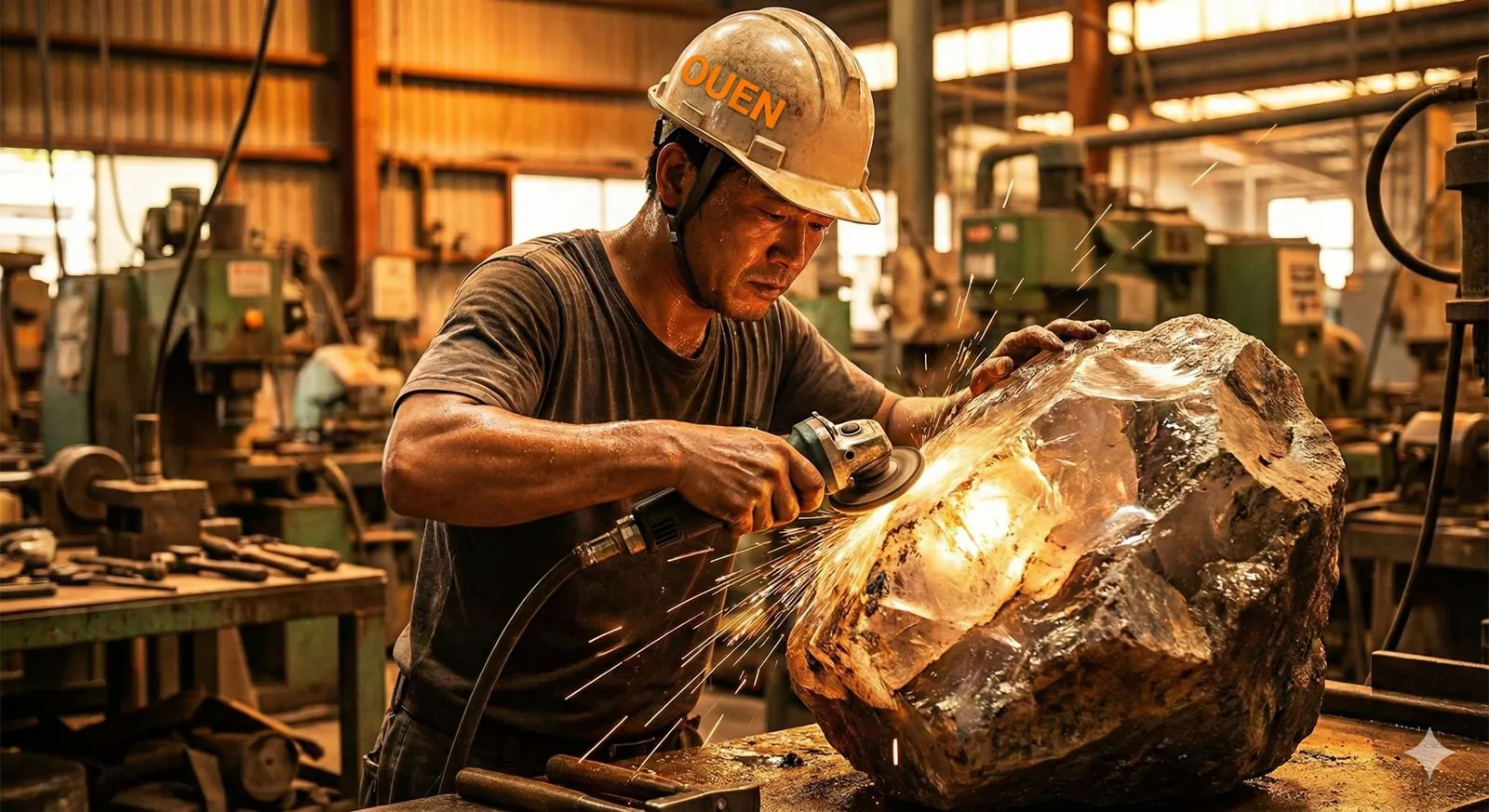
That is what we hear from factory floors. A technology is the rough stone of a breakthrough. For it to reach many hands and work as value, the rough stone is not enough. Closing the last mile that lies between a technology and the floor is, we believe, what we are for.
The weight of a mile that does not close easily
The last mile of a technology does not close easily.
- Do you understand the tangle of constraints particular to that floor?
- Do you carry a wide and deep enough set of tools from a technology that keeps changing?
- And above all, have you built enough trust that people will think if they say so, let’s try it?
Unless all of that is in place, the technology never starts running where the work is. We do not duck that process. By facing that mile honestly, however unglamorous it gets, the rough stone of a technology turns into a jewel of value that makes people sit up.
Not papering over it with convenient words
A technology can always be framed conveniently for someone who does not know how it works. Lining up comfortable phrases and handing over a black box may be more efficient in the short run.
We refuse it, flatly.
Taking advantage of what someone cannot check, leaving the facts vague, letting expectation run high: that is a desecration of the technology and a betrayal of the people on the floor. The integrity we hold to is, among other things, the rule that beats that temptation.
Peter Drucker named integrity as the quality that matters most in an organisation. It should be weighed before intelligence or talent, he argued; excellence without integrity carries a risk of damaging trust.
The integrity we mean is not a nice phrase. It is the resolve to keep at it, patiently and unglamorously, in order to work the rough stone of a technology into a tool that is useful where the work happens.
The three kinds of integrity we hold to
1. Integrity towards the result (thinking and doing)
Go back and forth between thinking and doing until value beyond what was expected exists. Keep asking why. Sweat with your head and your body. Do not become the critic; move, and see the result all the way out.
2. Integrity towards the facts (honest and open)
Do not frame information to suit yourself, do not hide what is so, and face it early. The worse the news, the sooner it goes out. Future trust before this quarter’s number.
3. Integrity towards people (building together, trusting each other)
Not a fire on the far bank — go and pull the chestnuts out yourself. When it is hardest, move on the question of how we go forward together; understand where the other person is coming from, and go at the heart of the problem.
Towards a future where the technology comes to meet people
The future we picture is not one where people memorise operations in order to work a modern system, or tidy their data to suit it.
“People should not have to meet the technology; the technology should come to meet them.”
That is what we are after. People get the benefit without having to be conscious of the system at all. We believe that is what a technology is supposed to look like.
Work that people need not do is carried by the mechanism; people concentrate on creative work where they can make the most of themselves.
The experience that comes out of that — people and technology in harmony, with no seam between them — is what we mean to make the standard for how things get made. We intend to stay as close to the floor as we can, and to keep walking alongside it, as the name OUEN asks of us.