What separates an AI visual inspection project that works from one that does not
The factors that decide an AI visual inspection project
What this article covers
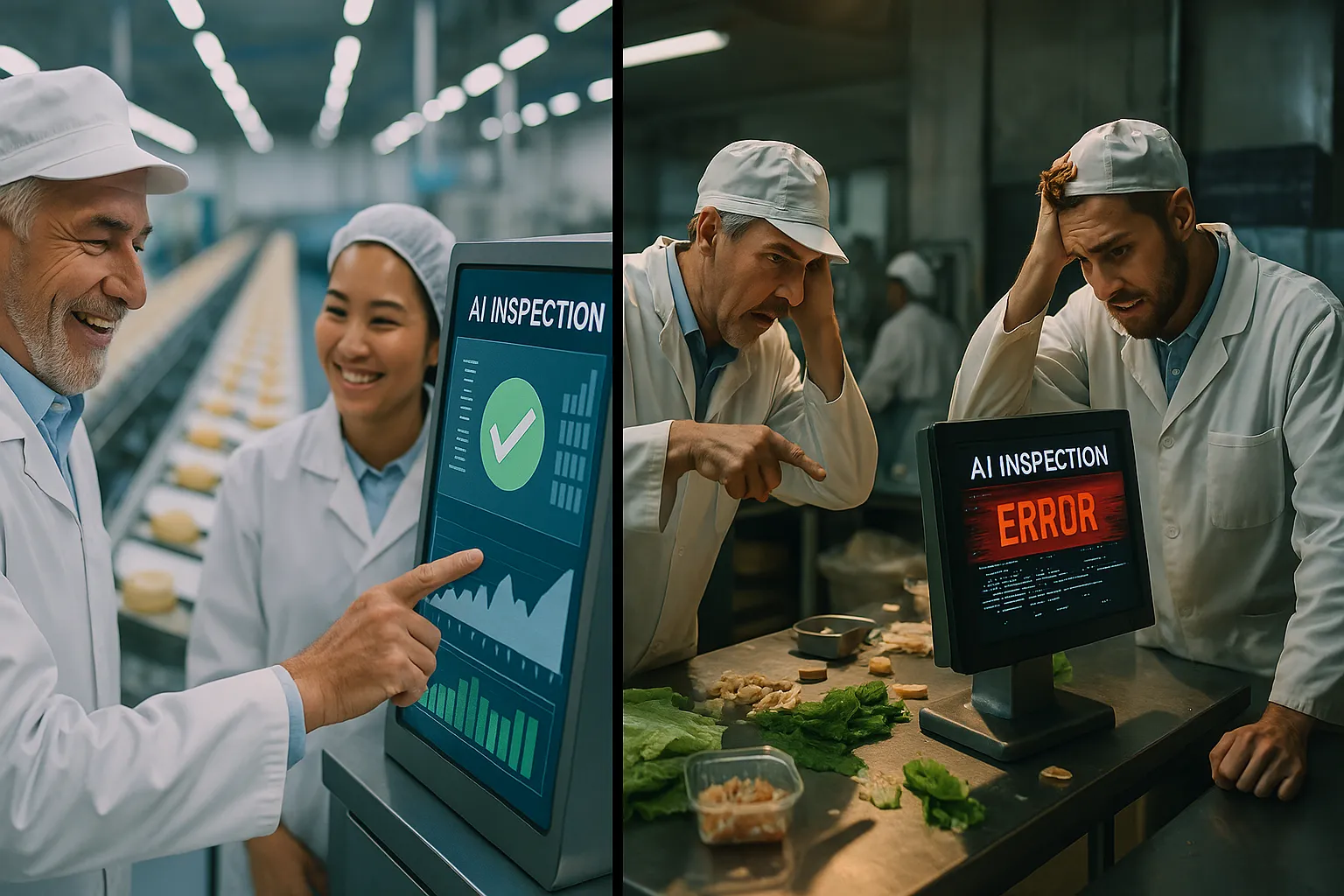
AI visual inspection has spread, and more factories are reaching the point of thinking it is about time they tried it. In practice, though, plenty of people report that the results are not what they hoped, or that the project stalled halfway. Projects that look alike from outside divide clearly into the ones that work and the ones that do not.
What follows comes from having supported a lot of these projects: the things that separate the two.
What the projects that work have in common
1. The person driving it is a supervisor who knows the floor
In a project that succeeds, the person in charge is not an administrator; they take the problem on the floor as their own. It works particularly well when the centre of gravity is a hands-on middle manager — a supervisor or an assistant section head — who can hold both the floor’s view and management’s.
Putting in a visual inspection system is a run of unglamorous work: collecting samples, getting cooperation from production. It takes both the appetite to get hold of a new technology and the patience to get past a string of obstacles.
2. The person in charge is willing to learn
AI visual inspection asks for a way of thinking unlike a conventional inspection machine: cameras, lighting, how training data is taken. “I do not really understand AI but I have been given the job” produces a very different speed and quality from someone who goes and learns.
When choosing inspection software that fits your environment and your subject in particular, understanding the categories of image processing — rule-based or AI, supervised or unsupervised — makes you harder to talk into something, and leads to a smoother and better choice of vendor. For more on those categories, see the article below.
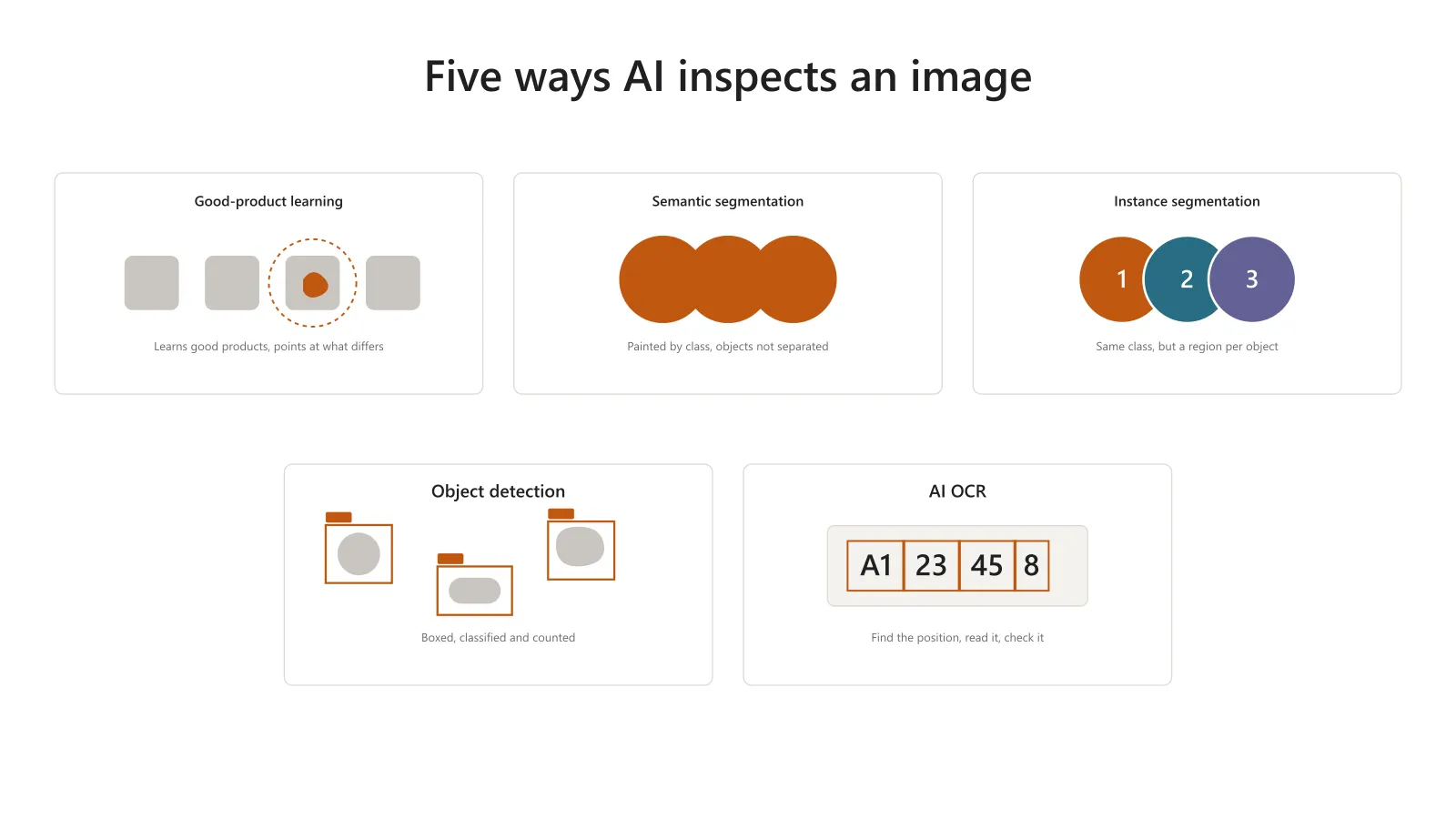
The kinds of visual inspection AI and how they work, from inside the industry
3. The flexibility to think while moving
There is no such thing as perfect preparation for AI. Setting up the environment, collecting samples, tuning the model: problems always appear as you go. So whether you can hold the attitude of trying it first and fixing what comes up is a major fork in the road.
4. Starting the validation on a small number of variants
Rather than aim at every product at once, start with one or two representative variants. Settle the mechanism and the know-how inside the company in the first phase, then spread it. Companies that can stage it this way get through the steps reliably.
It may be less that working on few variants goes well than that few variants help you avoid the failure modes below. Note, incidentally, that with our own Zero-Training AI it can be possible to cover many variants from the start. See the article below.
Want AI inspection but cannot collect defects? That is what Zero-Training AI is for
5. Taking a broad view of the return
Thinking of the return on AI visual inspection purely as a saving in labour cost misses the point. Replacing manual inspection with a system reduces the cost of re-inspection and scrap from defects escaping, the cost of training inspectors, and it holds quality steady on night shifts — costs that are hard to see. Those belong in the calculation.
An inspection system also makes visible, as images, the defect information that used to live only in an inspector’s head. For work aimed at not producing defects in the first place, being able to see concretely what is actually going wrong matters a great deal.
What the projects that fail look like
1. An instruction from the top, and nothing else
Someone is taken by the novelty of the word AI and orders it bought, without thinking about the problem on the floor or who will run it. AI is not finished when it is installed; running it afterwards is the point. If the people on the floor are not convinced, data collection and tuning do not happen, and you are left with an installation in name only.
Management, meanwhile, tends to grow impatient: how long is this tuning going to take? To avoid that, share the operational difficulties honestly alongside the benefits, and assign the right people.
2. The person in charge is passive
“I do what I am told”, “I do not make the call” — an AI project does not move on that. AI is a technology you teach and bring on. It wants people who run the validation themselves and grow it.
And so that nobody is swayed by a software salesperson’s talk, it is decisive that the person in charge learns for themselves and can ask and judge.
3. Casting the net wide and demanding perfection
Since we are buying it, let us use it on everything: aiming at many variants from the start is a recipe for failure. AI needs groundwork — knowing which defects you want found, collecting defect samples, validating the capture environment, tuning the model.
Try to stand up ten or twenty variants in parallel and sample collection and evaluation fall behind, and the project can collapse. In our experience, with conventional AI, three to five variants is the sensible ceiling for the initial phase. Start narrow and build, one at a time: that is the realistic way.
Start small, grow it
AI visual inspection is not finished when it is installed; it is a technology you bring on through operation. The companies that succeed start small and accumulate know-how through trial and error.
Not “we are introducing AI” but “we are building our own mechanism for quality using AI”. That view is the shortest route.
We think that first step through with you, and support the adoption that fits your floor.