A vendor's honest account: what adopting visual inspection AI is really like, and how to compare
An engineer in the field on comparing, choosing and adopting visual inspection AI
What this article covers
AI visual inspection has been adopted more and more widely. For most people weighing it up, the honest position is that it is not clear what actually differs between the options. Others have already bought something and cannot get the accuracy they need.
Every vendor’s description of their AI reads much the same. Put briefly, what separates them is the accuracy of the AI (and whether they built it themselves), integration with the equipment, cost, and maintenance and operation. What follows is one long-serving engineer’s account of how the industry really works, how to choose a vendor and frame the first request, and what to watch for. (And in the hope that more projects are done properly, and Japanese industry is the better for it.)
To begin with
What AI is, to begin with
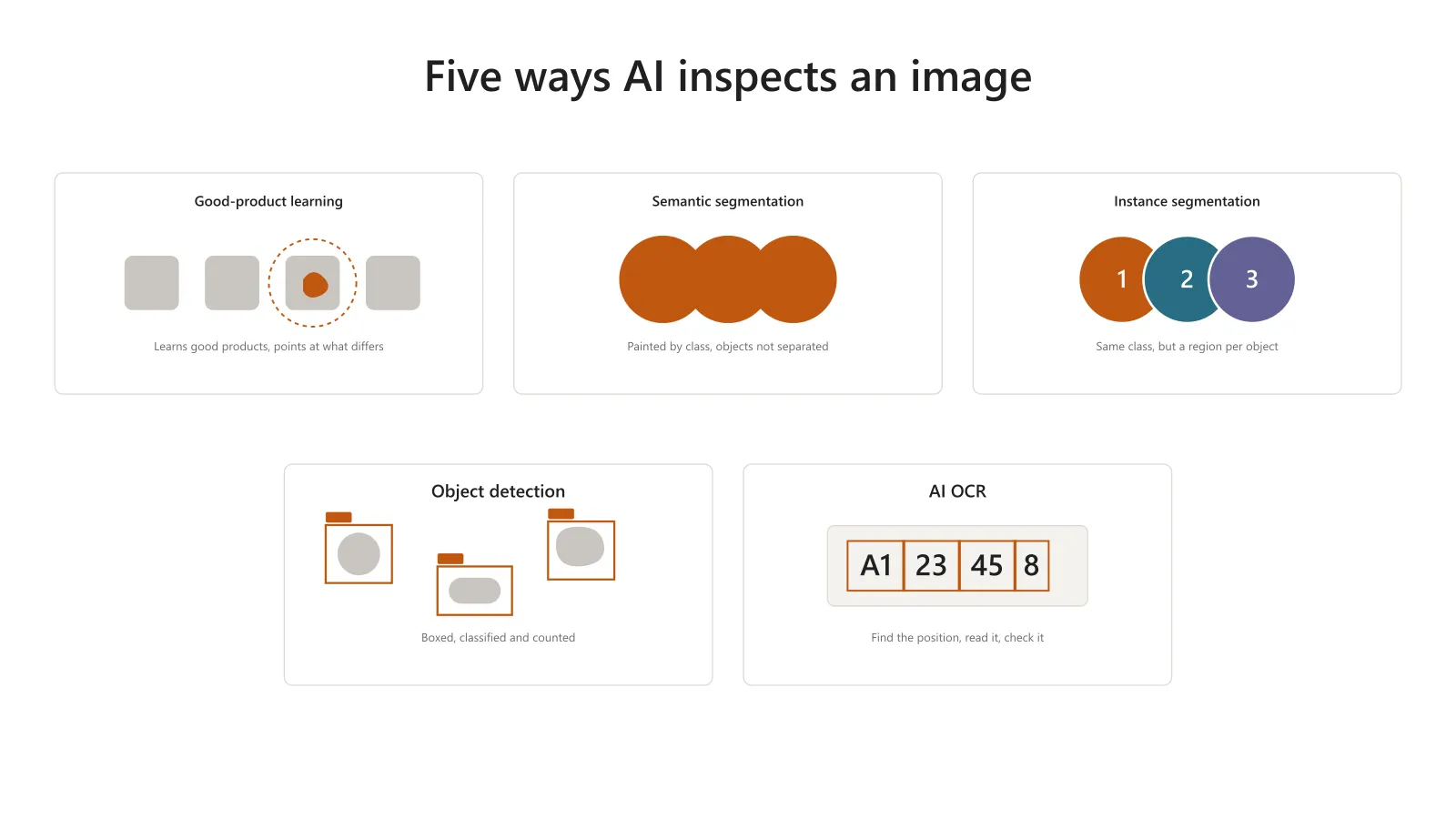
AI has spread a long way into visual inspection. On accuracy, this author’s own sense is that it has reached places image processing alone cannot get to, both technically and in terms of how easy it is. AI judges in a way close to a person: on food, say, complicated and irregular in shape, it can do what an image-processing filter struggles with. For the difference between image processing and AI, and the kinds of AI, see the next article. (Skip it if you already know.)
The kinds of visual inspection AI and how they work, from inside the industry
The usual objection to AI is that the process is a black box: the route to the judgement is too complicated to follow. (That can become a real sticking point for validation work in pharmaceuticals, for instance.) Having implemented both, though, this author now thinks AI is useful in most situations: the ease and the accuracy outweigh the opacity.
AI is not all upside, mind. Every company’s AI behaves differently, and none of it is universal — which is to say the field still demands expertise. For our part, if the inspection works we do not mind which method does it; what we want to avoid is a project going in wrong because of a misunderstanding. That is the spirit of what follows.
What to think about when adopting a visual inspection system
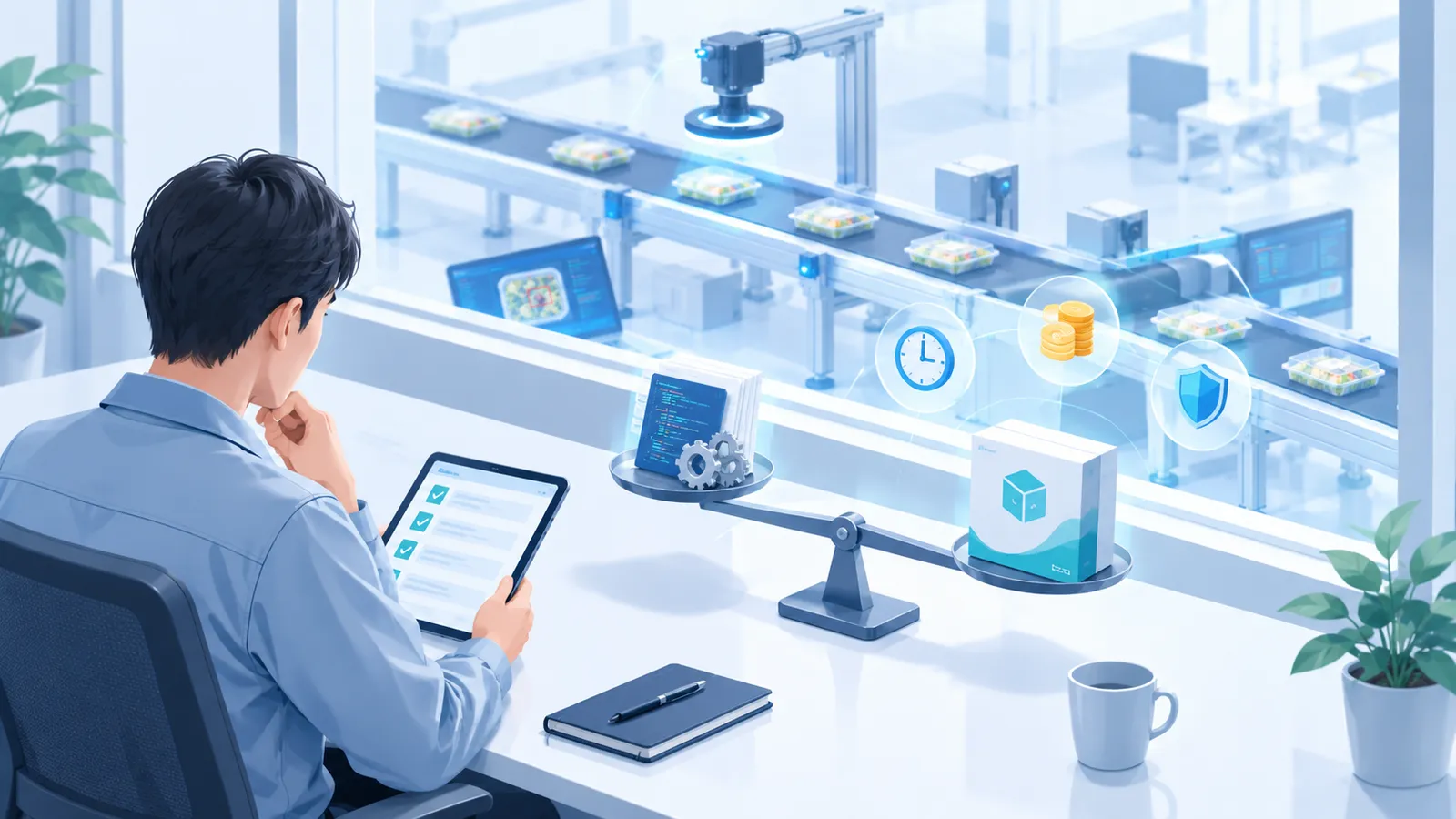
Four things matter: judgement accuracy, equipment, cost, operation. Having watched projects fail, this author believes that how much you can foresee at the very start is what counts above all. In visual inspection, and in equipment projects generally, accuracy and cost are always on a balance. It takes both proper knowledge on the user’s side and honest support on the vendor’s.
Accuracy
Is the algorithm the right one?
The variety of defects
Defects come in many kinds: dents, scratches, colour unevenness and so on. There can also be defects nobody anticipated, such as a foreign object. Pay attention to how many defects you want seen and how often they occur. Skip that and you can end up where we have seen others end up: a food inspection system that only inspects for scorching.
If you are going to use supervised learning (defect learning), the rough scale is at least defect modes × number of products × tens of images, and you need to picture the work of collecting that data and tuning afterwards.
Supervised learning also cannot handle a defect it has not seen, so accurate good-product learning deserves consideration. Note, though, that ordinary good-product learning is widely reported to produce false detections, so comparison matters.
If the defects are quite limited and the product is not complicated in shape, image processing — which needs no training data — may be enough.
Deciding which defects matter
Ideally, obviously, every defect would be detected with perfect accuracy and the buyer could relax. But every system has, to some degree, defects that are hard to detect and things it over-detects. The same is true of people. Judging accuracy before you buy takes a certain amount of work. When a vendor does it, the initial validation is usually limited to particular variants and defects. To do that efficiently, it matters to pick the defect such that if this one can be found, the others probably can too.
Among the defects that must be found, we suggest prioritising the small ones and the ones that are hard to see. Those bear on the camera resolution and on the processing time as well. Confirming that the hardest condition holds is the right way round.
It is also worth validating, where possible, that false detections do not become excessive — which simply means including good products in the validation.
How to compare, and what to watch
With both sides clear on the above, a project succeeds. So that nobody ends up saying this was not what we were promised, compare where you need to and judge as you go.
- Look at the difference in detection capability: compare against the same data as far as possible. And with AI, always specify training data and validation data separately. We see cases where the two were mixed, validation was done on the training data, and accuracy collapsed in production. That is a matter of vendor honesty, but the user should watch for it too.
- Look at the tools available: the kinds of AI, position correction, masking and the rest can matter a great deal in practice. For a pure comparison of accuracy it is better not to use them, but in operation they are useful ways of improving accuracy. At the very least, if a demonstration needs a combination of such processing, you should know what it is.
Equipment
Can you see the view you need to see?
An image inspection can only judge what was captured. If you need to see the sides or the back of a product, that may take rather more equipment. It has a large effect on cost, so splitting the inspection between people and the machine is a real option.
Does it fit the takt time?
You have to inspect at the rate you produce. Image processing generally takes from about 0.1 seconds; AI often takes 0.1 to 1 second. For in-line inspection particularly, that plus the handling of the part and the view calls for the right equipment and mechanism design. The usual means:
- Transport: conveyor, index table
- Turning the part over: a flipping mechanism, a robot arm, or arranging the cameras cleverly
Can it drive ejection, alarms and the rest?
In automated equipment, a defect has to produce some action: showing the defect, of course, but also stopping the line or ejecting the part.
The software should be able to talk to external equipment.
- Communication: PLC, digital IO and so on
- Ejection: air cylinder, solenoid cylinder, air blow, flap
Is the capture equipment right?
The camera, the lens and the lighting have to be chosen properly. We recommend industrial parts, for durability, and because the automatic corrections consumer equipment applies can get in the way of a stable result. As AI recognition improves there are cases where capture need not be as stable as image processing demanded, but dedicated industrial equipment remains the norm. The software, likewise, should support industrial cameras.
Cost
The initial service and what it costs
Adopting an AI visual inspection system generally runs through the steps below. Which steps a vendor supports varies, and that is worth checking.
The steps can be split between vendors, or some of them taken on by the user. But bear in mind that every step bears on the final accuracy. Very accurate positioning may make the image inspection easier, for instance, while making the equipment cost more.
The worst case — and we see it — is that the first demonstration goes well and production never reproduces it. Set the project up with the later steps in view.
A typical shape of service
| Phase | What happens | How long | Cost |
|---|---|---|---|
| 1. First conversation | Getting a sense of feasibility from an outline of the inspection and the budget | up to an hour | usually free |
| 2. Validation | Limited to particular variants and defects; a desk validation on a few to a few dozen images | up to about 2 weeks | usually free |
| 3. Proposal | A proposal including the equipment outline and the detection performance (quotation specification) | up to about a month | usually free |
| 4. Equipment design and build (where equipment is needed) | Designing and building the inspection equipment | several months | several million to several tens of millions of yen |
| 5. Operation | Operator training, support in production | ongoing | licence fee (several hundred thousand to several million yen) plus extras |
Operation
Running and maintaining the equipment is a large matter for the user after the purchase. This author’s view is that the system you adopt should let the user manage the following.
Maintenance
Change over time
There is variation between lots, and over the longer term the capture equipment, the lighting and the transport mechanism age. That can mean, for image processing too, retraining the AI or adjusting the thresholds. The software should have:
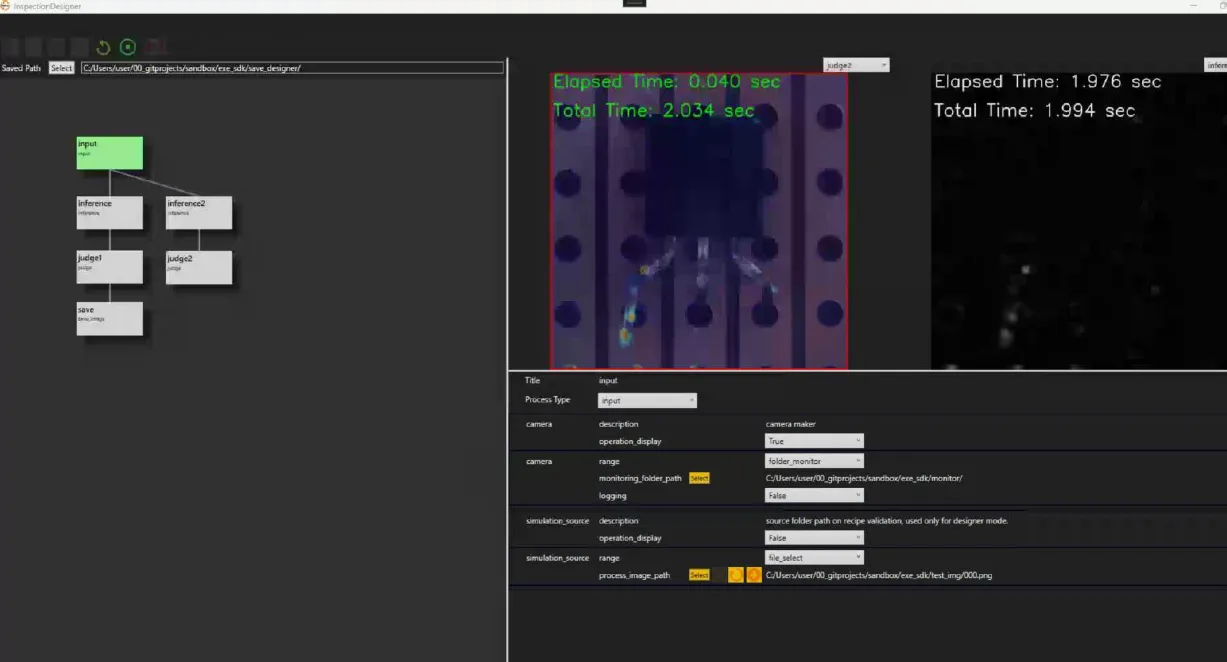
- an interface where the necessary settings can be made easily, without programming
- data accumulating so that retraining or a desk adjustment is possible
On the equipment side, it is worth knowing the supply and the cost of consumable parts.
What we do about it
Judging all of the above can be hard without some experience. Our recommendation is to stand the inspection up quickly with unsupervised learning (good-product learning) and move to defect learning where it is needed. Rather than let a project drag on, we stay alongside the operation and sharpen it where sharpening is called for. That, we think, is the shortest route to running well. Good-product learning demands more accuracy than people expect, and that is where the differences between products show; a good many companies have compared and chosen us. See also the article below.
It has run long. Thank you for reading.